Why financial institutions need real-time car valuations
The market for used cars is no longer the predictable, slowly depreciating asset class it was a decade ago. Supply shocks, electrification and shifting consumer demand have pushed vehicle prices in directions that fixed depreciation curves simply cannot anticipate. For banks, leasing companies and insurers — all of whom hold cars as collateral or as a replacement liability — that volatility is a real balance-sheet risk.
From depreciation curves to live market data
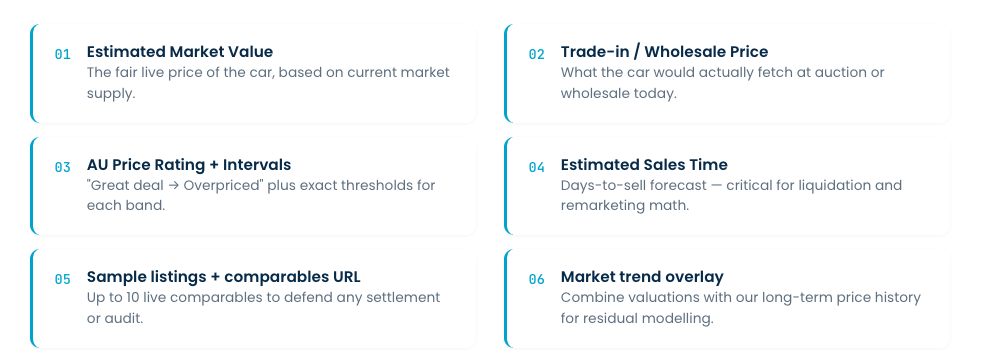
Most traditional residual value models lean on monthly or quarterly book values, which means lenders and lessors are pricing today's risk on data that's already weeks out of date. A live, market-based vehicle valuation — built on millions of active listings refreshed every 24 hours — gives finance teams the same view of the asset that the open market has. That alignment matters whether you're underwriting a new car loan, repricing a leasing portfolio, or settling a total-loss claim.
Defensible numbers for regulators and customers
Regulatory frameworks — from IFRS 9 expected-loss models to local supervisory expectations on automotive finance — increasingly require lenders to substantiate the value of their collateral and the assumptions behind their loss provisions. A third-party valuation grounded in transparent, market-derived data gives risk and audit teams an answer they can defend. On the customer side, the same transparency settles total-loss disputes faster: when the insurer hands the policyholder a settlement backed by comparable cars on sale and recently sold in the same market, the conversation moves from negotiation to acknowledgement.
From passive lender to active customer guide
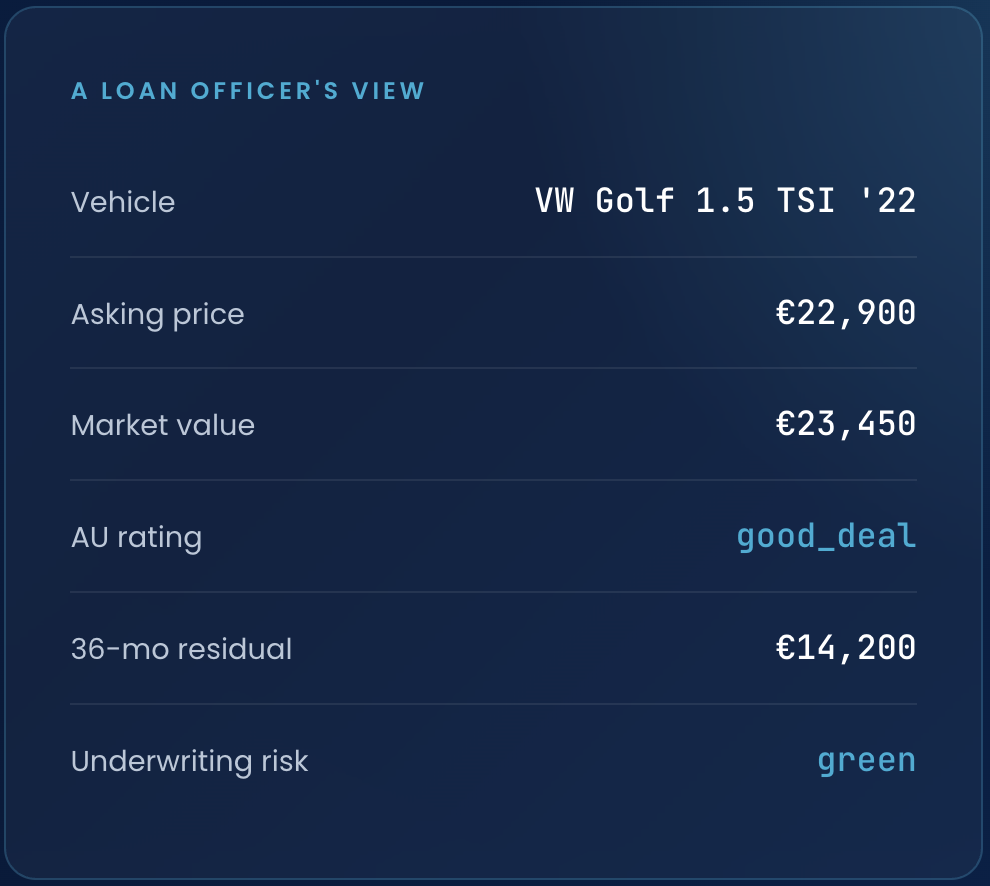
The most forward-looking financial institutions are no longer waiting for the customer to come back for the next loan. By running their existing book against live valuations every night, they can spot the moment a customer crosses into positive equity on their vehicle — or the moment a leased car is suddenly worth more than its forecasted residual — and reach out with a proactive offer. That turns a passive capital provider into a trusted automotive advisor, and a one-off loan into a repeating relationship.






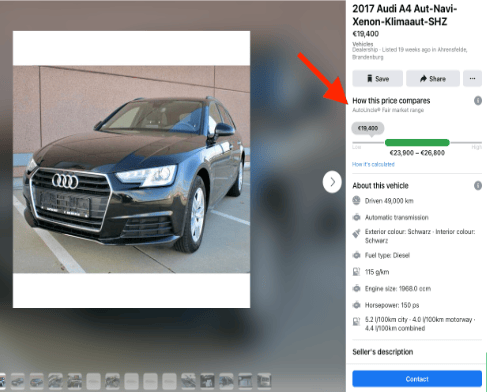
 FACEBOOK MARKETPLACE shows how the price of vehicles compares to others according to AutoUncle.